
What to Bring to Rehab: A Packing Checklist
Not sure what to pack for treatment? Here's a practical, printable checklist of what to bring to rehab — and what to leave at home — so your first day in a Delaware program goes smoothly.
Angela Robinson
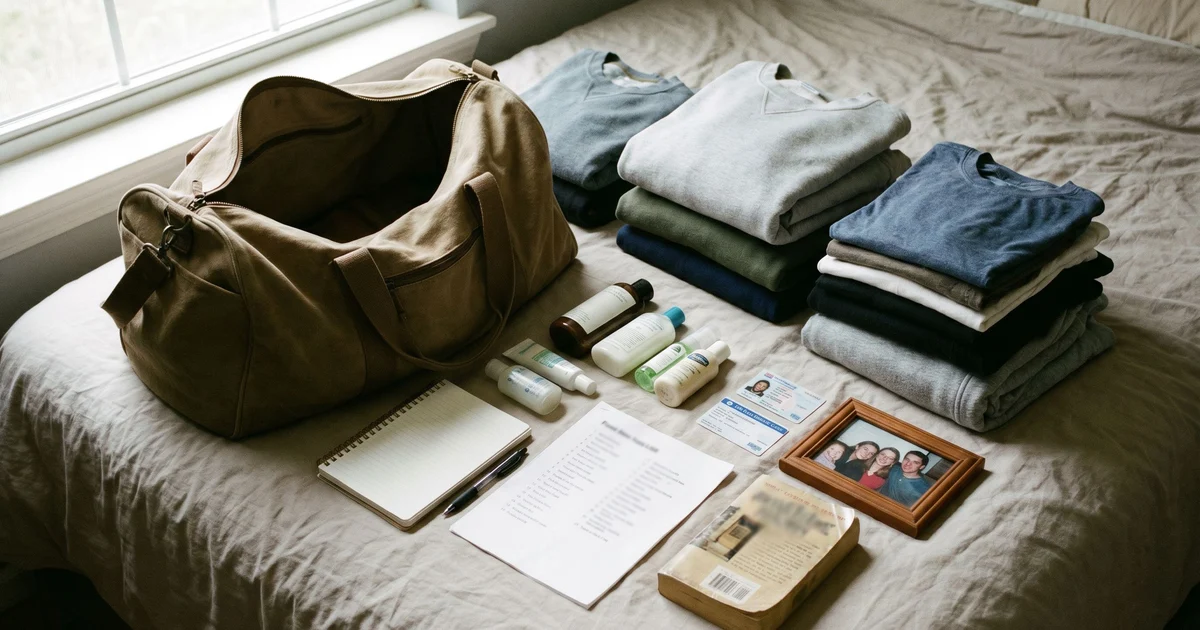
Pack light, practical, and comfortable: about a week's worth of casual clothing, basic toiletries (alcohol-free), your ID and insurance card, a list of your current medications, and a few comforting personal items. Leave behind anything with alcohol, valuables, and most electronics. Each program sends its own list, so confirm the details before you go.
Key takeaways
- Bring 5–7 days of comfortable clothing; laundry is usually available.
- Pack your ID, insurance card, and a written medication list.
- Leave alcohol-based products, valuables, and most electronics at home.
- Always check your specific program's packing list first — rules vary.
Why does packing the right things matter?
Treatment works best when it is individualized and medically informed, so bringing accurate health and medication information helps your care team build the right plan from day one.1 Packing well also removes a stressful unknown, so you can focus on recovery instead of logistics.
What should you bring to rehab?
Most residential programs in Delaware ask for a week's worth of essentials. Use this checklist as a starting point:
| Category | What to pack |
|---|---|
| Documents | Photo ID, insurance card, a written list of medications and doses, a small amount of cash, important phone numbers on paper |
| Clothing | 5–7 days of comfortable, weather-appropriate clothes, sleepwear, a light jacket, sneakers, slippers, and a swimsuit if there is a pool |
| Toiletries | Alcohol-free toiletries, toothbrush, comb, deodorant, and any unopened personal-care items |
| Medications | Current prescriptions in their original labeled bottles, plus the written list above |
| Comfort items | A few family photos, a journal, a paperback book, and a phone calling card if allowed |
What is not allowed in rehab?
Facilities restrict items that pose a safety or recovery risk. Commonly prohibited items include:
- Anything containing alcohol — including mouthwash, perfume, and many hand sanitizers
- Drugs, drug paraphernalia, and unapproved over-the-counter medicines
- Weapons or sharp objects
- Valuables, large amounts of cash, and revealing or substance-related clothing
- In many programs, laptops and gaming devices (phone use is often limited at first)
Can you bring your phone and medication?
Policies vary. Many detox and early residential programs limit phone access in the first days to reduce outside triggers, then allow scheduled calls. Bring your current medications in their original bottles so medical staff can verify and manage them safely.1
Have your insurance card ready as well — admissions staff use it to verify coverage during intake.
How to confirm your program's packing list
The single most important step is to call your program before you arrive. Ask for their exact packing list, laundry options, phone and visitor policy, and whether they provide bedding and toiletries.
If you have not chosen a program yet, you can browse Delaware treatment centers or use SAMHSA's free treatment locator to find licensed options.2 For guidance any time, call the SAMHSA National Helpline at 1-800-662-4357.3 If you or someone you love is in crisis, call or text 988.